
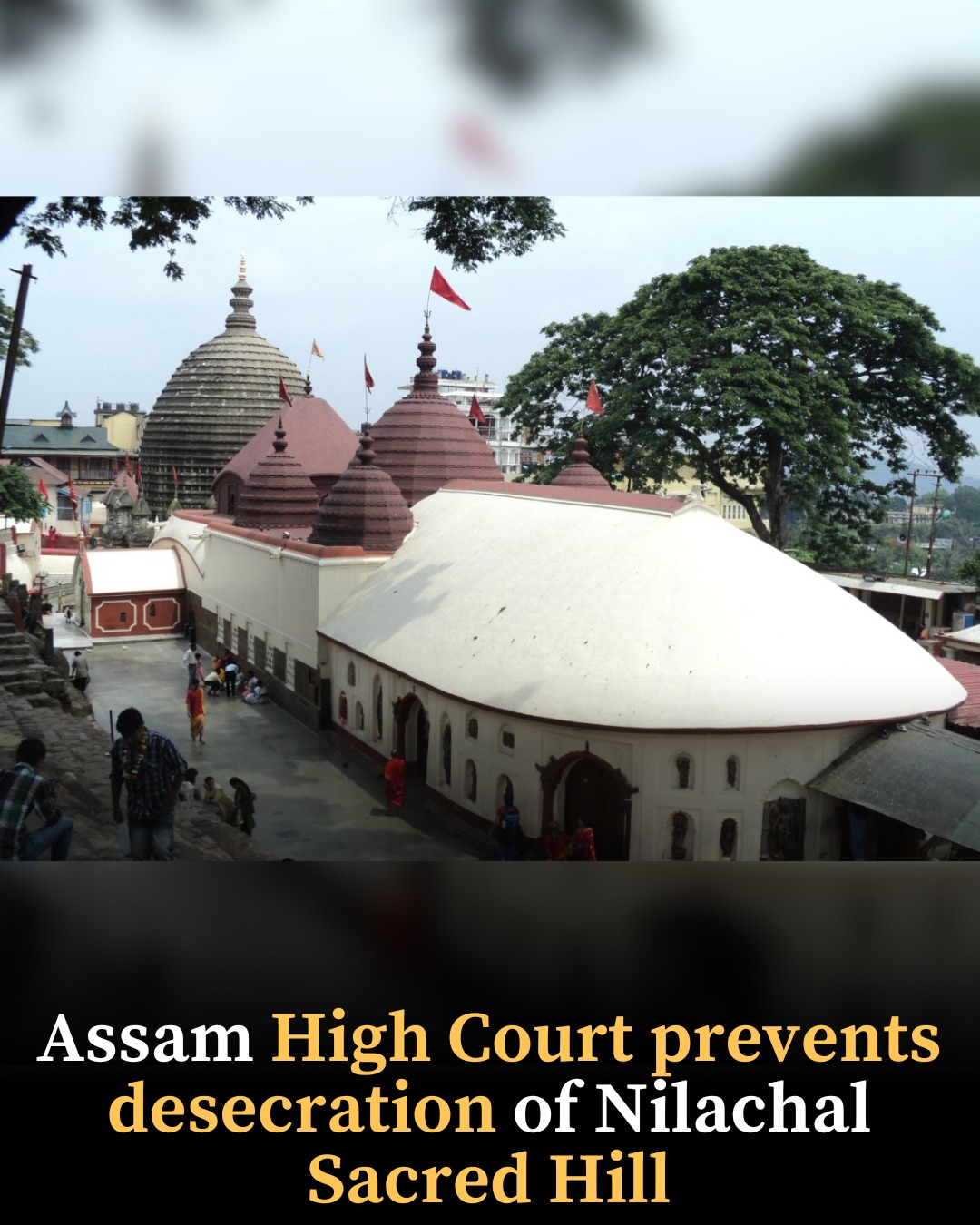
The Nilachal Hill in Gauhati, Assam is the location of the Kamakhya Shakti Peeth, one of the most revered Shakta shrines in Bharat where the Devi is worshiped as the embodiment of fertility and creative power. The Kamakhya Access Corridor, a project launched in 2024 by the Indian PM, seeks to to redevelop this place of pilgrimage as part of a wider national drive to improve connectivity and infrastructure in India’s Norther Eastern states. Over two years ago the project faced opposition from a number of stakeholders. Kamakhya is located in a sensitive ecological zone and hence environmentalists argued that the Corridor project would cause deforestation, destroy natural habits and increase pollution. Opposition also came from local priests and devotees of the temple. Unlike other temples where the deity is venerated in the form of a carved murthi, Devi Kamakhya is present in the form of the natural spring upon which the temple was built. Here the pilgrims connect to the Devi by touching the sacred water. The initial redevelopment plans involved extensive drilling on the hill which would have disrupted the flow of the water feeding this sacred spring. Prominent social media guru Rajarshi Nandy @rajarshinandy_kbuf, asserts the drilling is an act of sacrilege as the Nilachal hill itself is a form of Shiva.
For nearly 2 years, Hindu activists campaigned against the project and new Public Interest Litigations were filed in Gauhati High Court which stalled the project. The activists stated they do not oppose improving amenities at the site but asked the government to exercise more caution and care in averting environmental risks. In February, the Gauhati High Court permitted Assam State Government to go ahead with the project but stated that work should not interfere with the natural springs at the Kamkhya temple and other its associated shrines and emphasised that the rituals at the temple should not be interfered with. Critically during legal proceedings the state Government sought the assistance of Indian Institute of Hydrology for an intensive 18-month study on water movement at the site. This has lead to technical modifications of the initial plans.