
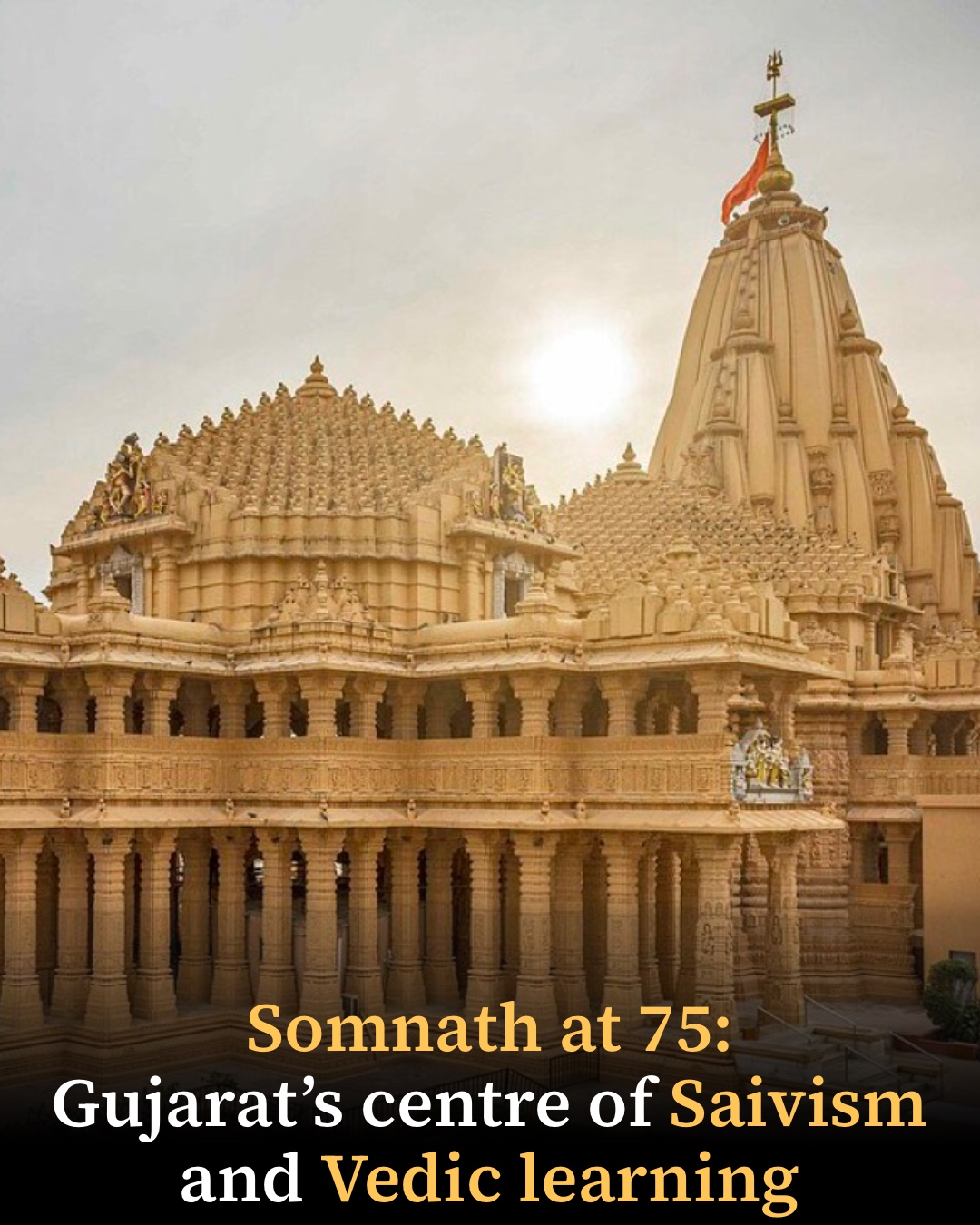
2026 marks 75 years since the re-opening of the reconstructed Somanth Temple and 1000 years since the it was first demolished by Islamic invaders. Following repeated attacks and demolition by invaders, successive generations of Hindus defended, reclaimed and revived his sacred site. Somanath Temple is therefore a symbol of Hindu strength and continuity. To mark this anniversary year, we will reflect on Somnath’s inspiring story – today we recount its significance as a centre of spirituality and learning. Somnath Temple; located at Prabhas Patan on the coast of Saurashtra (Gujarat, India), is dedicated to the Someshwara Jyotirlinga – one of the 12 prominent manifestations of Shiva located across Bharat. Prabhas is also significant for where Krishna and Balarama withdrew their avatars. Centuries before the popularity of Vaishnava and Jain traditions, Saivism was the dominant tradition of Gujarat with Prabhas as its epicenter.
The bronze age Indus Valley Civilisation stretched into what is now Gujarat, where some of the oldest remains of religious activity point to the pre-historic antiquity of Shiva and Shakti worship. From the start of the first century AD, Gujarat becomes an important region for the Pashupatas; the oldest of the Saiva Sampradayas, Lakulisha; the most influential Gurus from this tradition (2nd century) was born near moden Varodara. As champions of yoga, philosophy and temples, the Pashupatas revived Shiva worship across India, countering the influence of non-Vedic Buddhist and Jain traditions. The Pashupatas developed the Somnath Temple and under their monasteries, scholars and yogis, Prabhas also grew as a prominent centre of learning.
Along with attracting pilgrims and scholars, Prabhas was a thriving port. Attracting support from wealthy and powerful patrons; such as members of the Maitraka and Chalukya (Solanki) dynasties, Somnath was redeveloped several times and renowned for his exquisite craftsmanship. The Sompura Salat community of temple architects trace their name and origins to the building of Somnath.
Reference: K. M. Munshi. (1951). Somnatha: The Shrine Eternal