
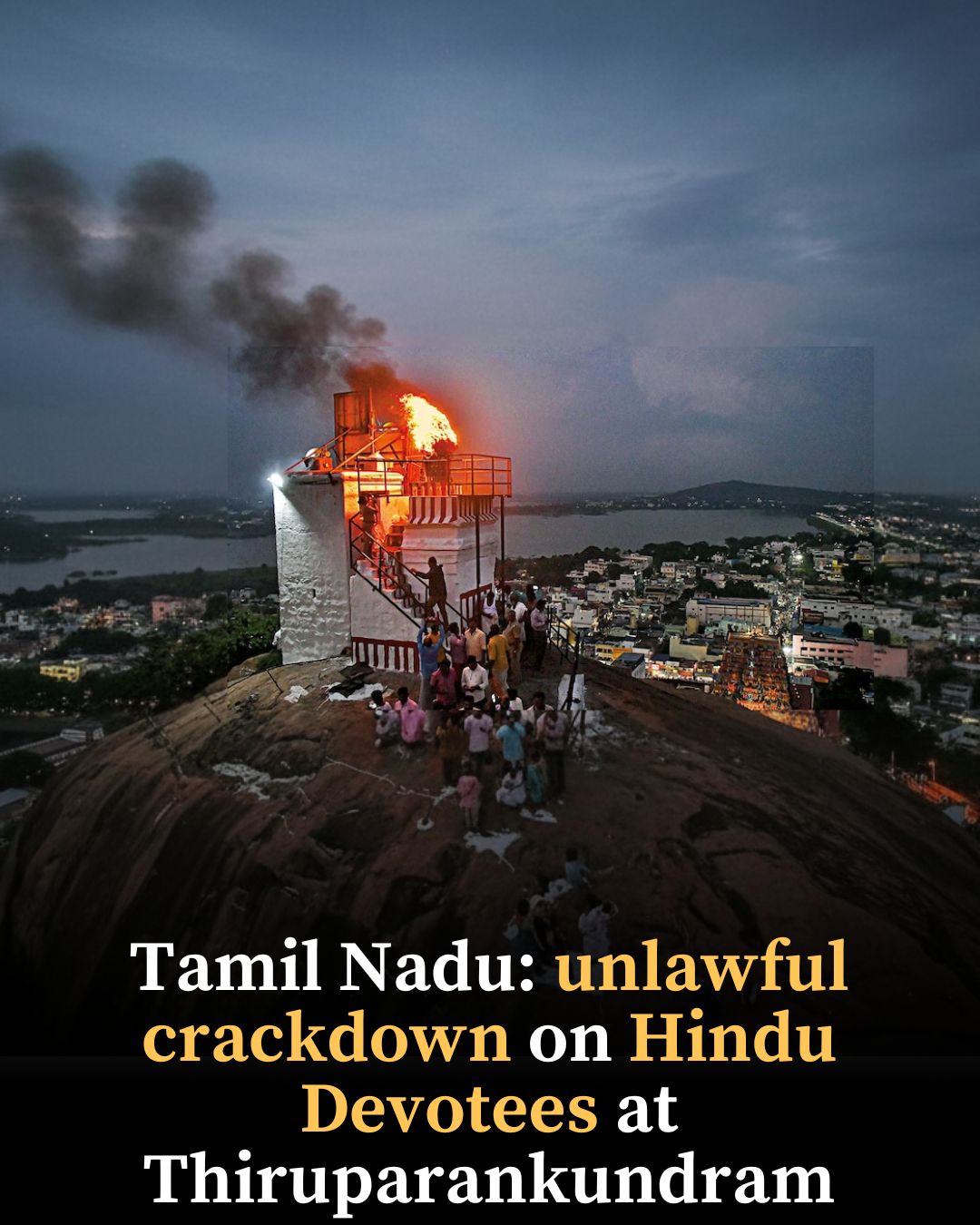
During the festival of Kartikai Deepam, Hindus for centuries have observed a tradition of lighting a sacred lamp at a Deepathon (stone beacon) at the top of the sacred Thiruparankundram Hill (Madurai, Tamil Nadu, India). There are records of this site being a place of Hindu pilgrimage as early as the 2nd-4th century CE. In the British colonial era, attempts were made to islamise the site, with claims that the grave of the 14th-century Muslim ruler Sikandar Shah is located on the hill. Despite evidence for this grave being located elsewhere in Mudarai, a Dargah (Islamic grave shrine) was built on the hill, and repeated attempts were made to erase its Hindu identity. In 1920, the British courts ruled that the entire hill belongs to Murugan temple, except the plot of land occupied by the Dargah.
Though located on land under Temple jurisdiction, the Deepathon is close to the Dargah. To appease local Islamists, state governments have for decades prevented the use of the Deepathon during Kartikai Deepam under the pretext that it maintains religious harmony. Under political pressure, Hindus were forced to perform this ritual elsewhere. Ahead of 2025’s Deepam festival on 4th December 2025, a group of Hindus filed a court petition to reclaim access to the Deepathon. On 1st December, Justice G.R. Swaminathan of the Madras High Court ruled in favour of the petition, citing the 1920 ruling that the site belongs to the Temple. Swaminathan explained that Hindus accessing the area posed no threat to the worshipers at the Dargah. In defiance of this ruling, the Tamil State government ordered police to barricade the Deepathon in time for the festival and prevented Hindus from accessing it. Hundreds of Hindus attempting to access the Deepathon were met with police brutality and arrested. The DMK; the ruling party of Tamil Nadu, was founded on a divisive anti-Hindu ideology. In 2023, DMK minister U. Stalin called for the eradication of Hindu Dharma, comparing it to a virus.